
The way we count large numbers differs greatly across languages and cultures.
In East Asian systems, numbers are grouped by ten-thousands (10^4), whereas in English they are grouped by thousands (10^3).
Here’s how large numbers are named in multiple languages.
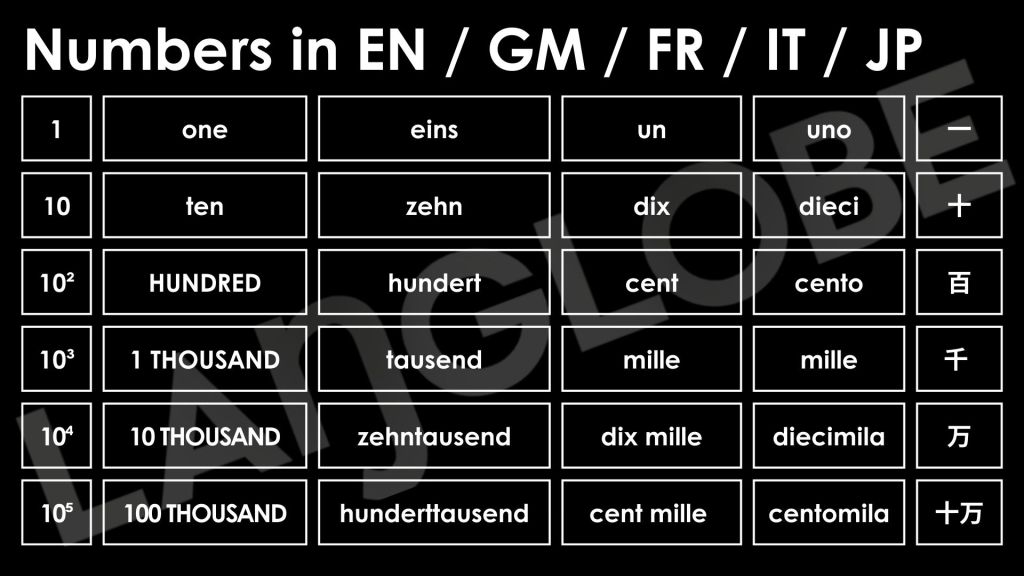
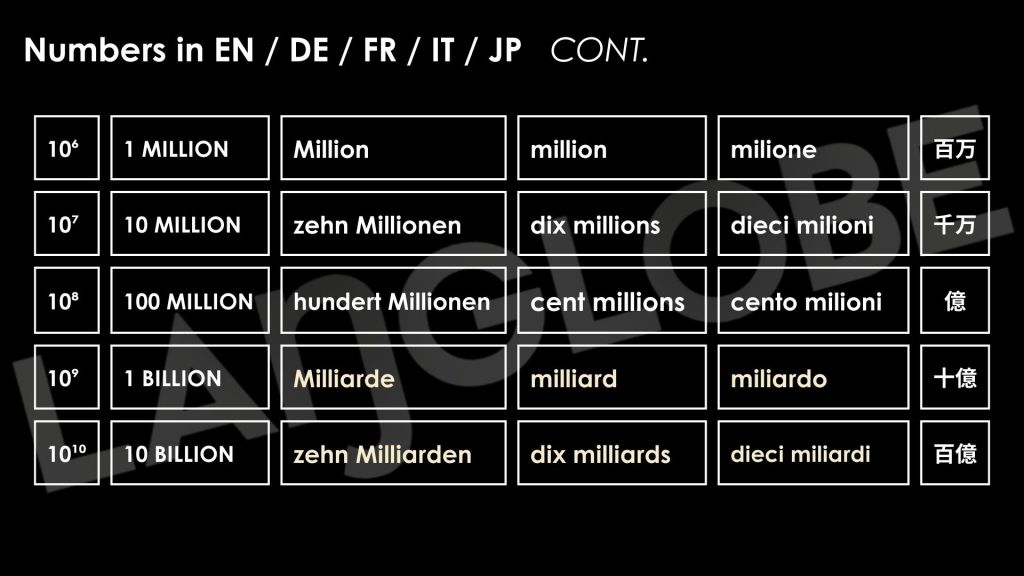
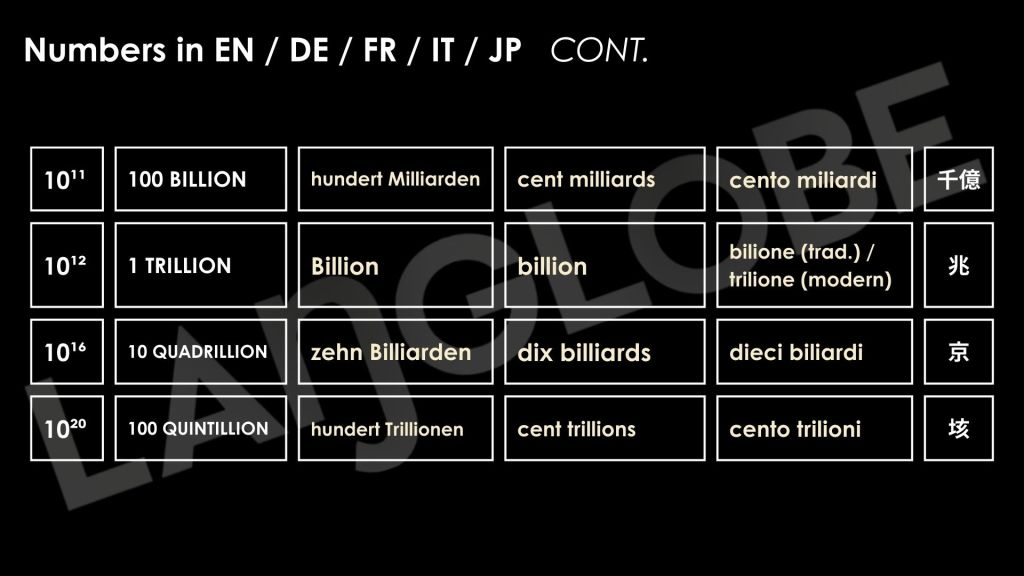
In continental European languages such as German, French, and Italian, the long scale is used. In this system, 10^9 is expressed as Milliarde / milliard / miliardo rather than billion, because in the long scale the word billion is reserved for 10^12.
The UK is said to have officially adopted the short scale in 1974, and today both British and American English use trillion = 10^12. Germany, France, and Italy, however, are still considered to officially retain the long scale in their national standards.
- English (short scale): trillion = 10^12
- German (long scale): Billion = 10^12
- French (long scale): billion = 10^12
- Italian (long scale): bilione (traditional) / trilione (modern) = 10^12
The way we name numbers reflects not only mathematics but also cultural history.
#Trillion #Billion #LargeNumbers #NumberSystem #ShortScale #LongScale #BillionVsTrillion #NumberNaming #CulturalHistoryOfNumbers #LanguageComparison #WordOrigins #Linguistics #LanguageLearning #English #German #French #Italian #Japanese #MathInLanguage #LANGLOBE

 LANGLOBE® Official(ラングローブ公式)
Leave a comment